Tinubu 2027: PDP, APGA, Accord Figures Boost Re-Election Coalition

Tinubu 2027: PDP, APGA, Accord Figures Boost Re-Election Coalition
Opposition Alliances Reshape Nigeria’s Political Landscape as APC Prepares for Kaduna Campaign Flag-Off
The political calculations ahead of Nigeria’s 2027 presidential election appear to be undergoing a significant transformation as President Bola Ahmed Tinubu’s re-election campaign attracts influential figures from opposition political parties, raising fresh questions about party loyalty, political alliances and electoral competition.
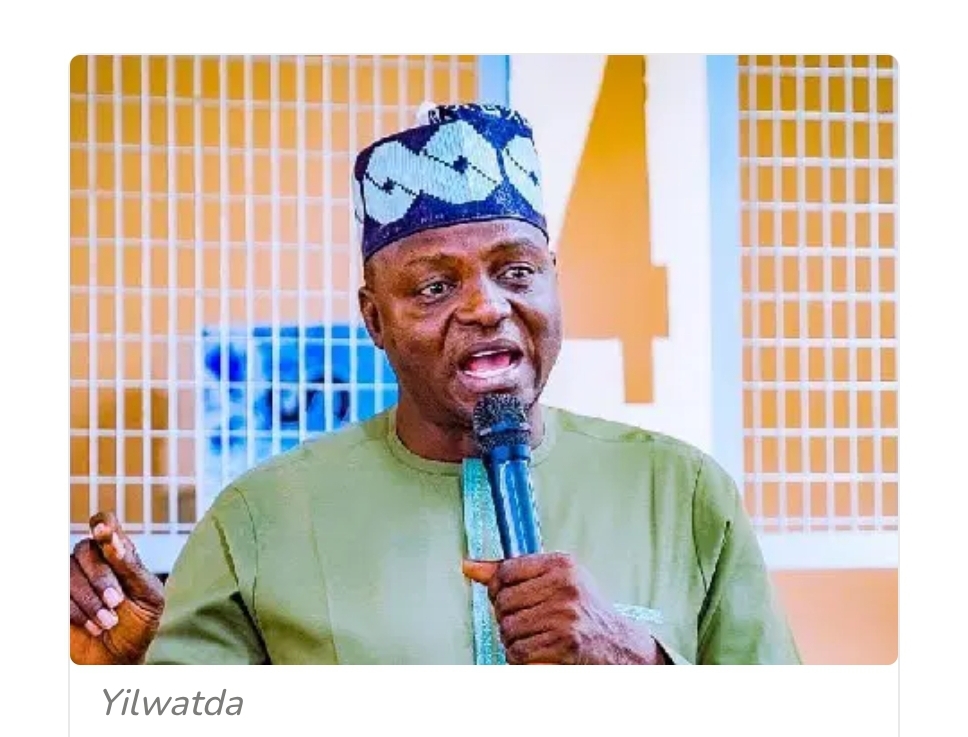
National Chairman of the All Progressives Congress (APC), Professor Nentawe Yilwatda, has disclosed that prominent political actors associated with the Peoples Democratic Party (PDP), All Progressives Grand Alliance (APGA) and Accord have aligned with the President’s second-term ambition, describing the development as evidence of expanding political support beyond traditional party boundaries.
Speaking with State House correspondents after a meeting with President Tinubu alongside the Director-General of the APC Presidential Campaign Council, Senator Abdulaziz Yari, Yilwatda maintained that the ruling party was building a formidable political coalition ahead of the 2027 presidential election. He also confirmed preparations for the nationwide campaign flag-off scheduled for Saturday, October 24, in Kaduna.
The emerging political arrangement has brought prominent opposition figures into the President’s campaign structure, including Minister of the Federal Capital Territory Nyesom Wike, Anambra State Governor Professor Chukwuma Charles Soludo and Osun State Governor Ademola Adeleke. Their involvement represents an unusual political alignment in which influential politicians maintain their respective party affiliations while supporting a presidential candidate from another political platform.
Political observers believe the development could significantly influence electoral calculations in Rivers, Anambra and Osun states, where the three political heavyweights command considerable influence. Beyond strengthening the APC’s mobilisation machinery, the arrangement also raises questions about how opposition parties intend to maintain their identities while some of their leading figures participate in the ruling party’s presidential campaign.
However, Yilwatda’s declaration should not necessarily be interpreted as confirmation that the entire national leadership structures of the PDP, APGA and Accord have formally endorsed Tinubu. The distinction between individual political support and institutional party endorsement remains important as Nigeria approaches another competitive electoral cycle.
The development has also brought renewed attention to the political strategy popularly described as the Rainbow Coalition, which seeks to accommodate influential stakeholders across party lines. For the APC, the strategy could provide access to established grassroots structures, regional political networks and influential personalities capable of expanding the President’s electoral reach.
Meanwhile, Senator Abdulaziz Yari has assured Nigerians that the presidential campaign will concentrate on government performance, policy achievements and the administration’s development agenda rather than personal attacks against political opponents. According to him, the ruling party intends to present its record in office and persuade voters that continuity would advance the country’s development objectives.
As preparations intensify for the Kaduna campaign launch, attention is expected to shift towards how effectively the APC can translate its expanding political alliances into electoral support. Equally important will be the response of opposition parties seeking to establish themselves as credible alternatives to the ruling party.
Ultimately, while cross-party endorsements may strengthen Tinubu’s political machinery, the outcome of the 2027 presidential election will depend on voters’ assessment of governance, economic conditions, security, public confidence and the competing visions presented by presidential candidates.