Fuel Subsidy Debate: Atiku Fires Back at Tinubu as Economists Question Return to Costly Policy

Fuel Subsidy Debate: Atiku Fires Back at Tinubu as Economists Question Return to Costly Policy
By Akin Alade
Nigeria’s long-running debate over petrol subsidy has returned to the centre of the 2027 political conversation following a fresh confrontation between President Bola Ahmed Tinubu and former Vice President Atiku Abubakar, with fundamental questions emerging over whether the country can afford any form of subsidy after years of fiscal pressure.
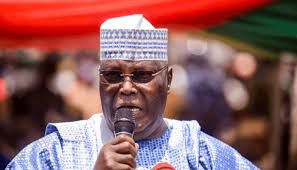
Atiku fired back at Tinubu on Friday after the President criticised his proposal for intervention in the petroleum sector, accusing the administration of removing the subsidy while allegedly allowing inefficiencies and opaque costs within the system to remain.
The former Vice President argued that Nigerians had been forced to bear the consequences through substantially higher fuel prices and increased living costs.
But beyond the political exchanges, Atiku’s position has reopened an important economic debate: Should Nigeria ever return to subsidising petroleum products after the enormous fiscal burden associated with the previous regime?
For years, numerous economists, international financial institutions and Nigerian fiscal policy experts argued that the old petrol subsidy system was financially unsustainable, vulnerable to abuse and disproportionately beneficial to consumers who used more petroleum products.
President Tinubu eventually abolished the subsidy regime upon assuming office on May 29, 2023.
Three years later, however, the economic and political consequences of that decision continue to divide Nigerians.
Atiku: My Proposal Is Not the Old Subsidy System
Atiku has attempted to draw a distinction between his proposal and the subsidy arrangement Nigeria operated for decades.
His latest position proposes a targeted, capped, budgeted, time-bound and independently audited production-support mechanism for domestic refineries, rather than restoring the previous open-ended subsidy on imported petrol.
The former Vice President maintains that such an arrangement could reduce pressure on consumers while encouraging domestic petroleum refining.
He also accused the Tinubu administration of removing the subsidy without eliminating what he described as the racketeering and opaque financial arrangements associated with Nigeria’s petroleum sector.
His argument is essentially that removing the subsidy should have been accompanied by deeper structural reforms capable of lowering production and distribution costs.
The Presidency sees the issue differently.
Tinubu has criticised Atiku’s proposal, arguing that attempting to restore subsidy demonstrates a misunderstanding of the country’s economic realities.
That disagreement has transformed fuel subsidy from an economic policy debate into what could become one of the defining campaign issues ahead of 2027.
Why Economists Wanted the Old Subsidy Removed
Whatever the political argument, there were strong economic reasons behind longstanding demands for subsidy reform.
Nigeria spent enormous sums keeping petrol prices artificially below market levels.
The system placed pressure on government finances, encouraged cross-border smuggling and created opportunities for questionable subsidy claims.
Because richer households generally consume more petrol through multiple vehicles, generators and other equipment, economists also questioned whether universal petrol subsidy was the most efficient method of assisting poorer Nigerians.
This explains why successive Nigerian administrations discussed subsidy reform long before Tinubu eventually implemented it.
The argument was straightforward: money spent subsidising petrol could potentially be redirected towards roads, hospitals, education, transportation, power infrastructure and targeted social protection.
That economic logic remains difficult to dismiss.
Government Says ₦15.8tn Was Saved
The Tinubu administration recently provided figures illustrating the fiscal significance of subsidy removal.
According to Finance Minister and Coordinating Minister of the Economy Taiwo Oyedele, approximately ₦15.8 trillion was mobilised for the Federation between June 2023 and December 2025 as a result of petrol subsidy removal.
Of this amount, the Federal Government reportedly received approximately ₦5.4 trillion, while states and local governments shared about ₦10.4 trillion.
The administration argues that these resources strengthened government finances and helped Nigeria avoid a potentially deeper fiscal crisis.
The government has also said savings arising from fuel and foreign-exchange reforms have been absorbed partly by increased debt-servicing obligations, higher government expenditure, the new minimum wage and programmes including student loans.
These explanations provide important context to claims that subsidy savings simply disappeared.
But Nigerians Are Asking: Where Is the Relief?
The weakness in government’s subsidy argument has largely been at household level.
Economic reforms may improve government finances while simultaneously inflicting considerable short-term hardship on citizens.
Petrol prices increased dramatically following subsidy removal, with transportation costs subsequently affecting food prices, manufacturing, logistics and virtually every sector dependent on energy.
That explains why the subsidy debate cannot be settled by government revenue figures alone.
Ordinary Nigerians judge economic policy primarily by purchasing power, employment, food prices, transportation costs and their ability to meet everyday expenses.
International investors and financial institutions have broadly welcomed Nigeria’s reforms, but even assessments supportive of reform acknowledge the severe cost-of-living consequences experienced by millions of citizens.
That is precisely the political opening Atiku is attempting to exploit.
Atiku’s Biggest Challenge
Atiku’s greatest challenge will therefore be convincing Nigerians — and particularly economists — that his proposed intervention would not recreate the problems associated with the previous subsidy regime.
Calling the proposed mechanism targeted and temporary is one thing; designing safeguards capable of preventing manipulation is another.
Nigeria’s experience demonstrates how easily subsidy programmes can become vulnerable to inflated consumption figures, questionable payments, smuggling and politically connected intermediaries.
Any proposed subsidy must therefore answer several fundamental questions.
How much would it cost annually?
Who would qualify?
What would prevent abuse?
How long would it remain in operation?
Would government subsidise consumers, refiners or production?
Who would independently audit payments?
And, perhaps most importantly, where would the money come from without increasing borrowing or reducing expenditure on infrastructure and essential public services?
Until these questions receive detailed answers, critics will continue questioning the financial sustainability of Atiku’s proposal.
Tinubu Must Also Answer Transparency Questions
Atiku is not the only politician facing difficult questions.
The Tinubu administration must equally demonstrate clearly what Nigerians have gained from the enormous sacrifices demanded by subsidy removal.
Government cannot permanently defend reform using macroeconomic statistics alone.
If revenues increase while households remain under severe financial pressure, political resistance will inevitably grow.
Transparency over subsidy savings, petroleum-sector expenditures and Federation Account revenues will therefore remain crucial.
The International Monetary Fund reported in its 2026 assessment that estimated savings from the completed subsidy removal did not appear to have accrued directly to the federal budget in 2025, further illustrating the complexity surrounding the accounting and distribution of reform gains.
Government therefore has an obligation to communicate more clearly how subsidy savings translate into tangible improvements in citizens’ lives.
Subsidy Debate May Shape 2027 Election
The political battle between Tinubu and Atiku ultimately reflects two competing approaches to Nigeria’s economic challenges.
Tinubu is defending painful structural reform on the argument that the old economic model was unsustainable.
Atiku is arguing that reform without sufficient protection for citizens risks becoming punishment rather than progress.
Both arguments contain issues Nigerians will scrutinise carefully.
A wholesale return to Nigeria’s old petrol subsidy regime would face serious economic objections because of its enormous fiscal cost and history of abuse.
But subsidy removal without transparency, efficient domestic refining, improved public transportation and credible social protection can equally leave citizens questioning who ultimately benefits from reform.
That is why the real question ahead of 2027 may not simply be whether Nigeria should restore fuel subsidy.
It may instead be whether the country can design an energy-pricing system that protects public finances without forcing its poorest citizens to carry an unbearable proportion of the adjustment.
For Atiku, promising relief may have political appeal, but he must demonstrate that his proposed production-support model can survive rigorous economic scrutiny.
For Tinubu, defending subsidy removal will require more than reminding Nigerians about the failures of the past.
The President must demonstrate that the sacrifices Nigerians have made since 2023 are producing measurable improvements in their standard of living.
Ultimately, economic reform becomes politically sustainable only when citizens can feel its benefits.