2027: Wike Bets on Cross-Party Alliance to Boost Tinubu’s Re-election Bid

2027: Wike Bets on Cross-Party Alliance to Boost Tinubu’s Re-election Bid
By Akin Alade
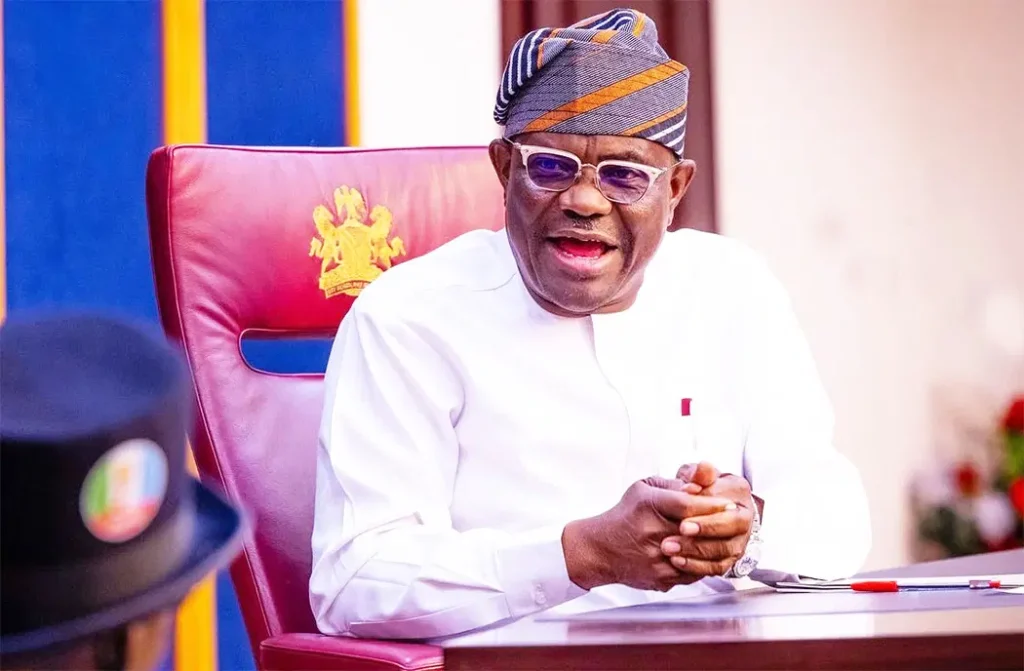
Minister of the Federal Capital Territory, Nyesom Wike, is banking on a cross-party political alliance to strengthen President Bola Ahmed Tinubu’s re-election chances in 2027, bringing together stakeholders of the All Progressives Congress (APC) and the Peoples Democratic Party (PDP) under his Rainbow Coalition initiative. The strategy signals an attempt to build a broader presidential support base beyond conventional party structures, with Wike taking responsibility for coordinating mobilisation in the FCT and Rivers State.
Wike announced the strategy at a stakeholders’ meeting of the Rainbow Coalition in Abuja, where he declared himself the field commander of Tinubu’s re-election campaign in the two territories. He urged political actors to set aside party differences for the presidential contest, arguing that a shared objective should take precedence over their separate political affiliations. The meeting attracted party chairmen, serving and former senators, National Assembly candidates and political leaders from the FCT’s six area councils.
One of the most significant developments at the meeting was the reported decision by PDP National Assembly candidates in the FCT to support their APC counterparts. If sustained, the arrangement could reshape the political calculations in the territory by creating a common front for the presidential election and selected legislative contests. It also raises questions about how participating politicians will manage their party identities and electoral ambitions as the 2027 campaign gathers momentum.
Wike pointed to the 2024 Edo State governorship election as an example of how cooperation among politicians from different political backgrounds could influence electoral outcomes. He argued that alliances built around shared interests could deliver results even where party affiliations differ. However, the effectiveness of the strategy in the FCT and Rivers State will ultimately depend on the strength of local political structures, voter preferences and the ability of coalition leaders to coordinate activities down to individual polling units.
The minister also based his argument for Tinubu’s re-election on infrastructure projects and institutional reforms in the FCT. He highlighted road construction and rehabilitation, school renovations, improvements to public facilities and the creation of the FCT Civil Service Commission, Women Affairs Secretariat and Youth Development Secretariat. Wike maintained that the administration’s record provided a basis for asking residents to support the President for another term.
Yet the Rainbow Coalition’s greatest challenge may be converting public endorsements into electoral results. Political gatherings and declarations of support do not automatically guarantee that voters will follow their leaders’ preferences at the ballot box. The coalition will need effective grassroots engagement, sustained mobilisation and a credible explanation of how the administration’s policies have benefited residents, particularly amid continuing concerns about living costs and economic pressures.
Wike has also maintained that his support for Tinubu does not prevent the PDP from fielding candidates in governorship, National Assembly and state assembly elections. This position suggests that the coalition is intended primarily as a presidential mobilisation platform rather than a formal merger between the APC and PDP. The arrangement nevertheless creates a delicate balancing act for politicians who may support the same presidential candidate while competing against one another in other elections.
As the 2027 general election approaches, Wike’s Rainbow Coalition will face a clear test: whether its cross-party network can deliver measurable support for Tinubu without triggering deeper divisions within the participating parties. Its performance in the FCT and Rivers State could become an important indicator of the influence of political alliances in Nigeria’s next presidential contest.