2027 Presidency: Peter Obi’s Camp Challenges Shettima Over Governance Records
2027 Presidency: Peter Obi’s Camp Challenges Shettima Over Governance Records
By Akin Alade
As political activities gather momentum ahead of Nigeria’s 2027 general elections, the Peter Obi Media Office has challenged Vice President Kashim Shettima to shift attention from personal criticism to a factual assessment of governance records, insisting that political relevance should be determined by the electorate rather than the pronouncements of political opponents.
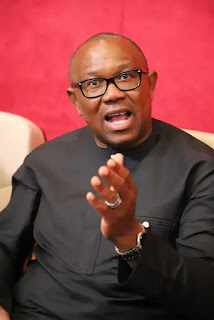
The challenge followed Shettima’s description of former Anambra State Governor and presidential candidate of the Labour Party in the 2023 general elections, Peter Obi, as a “diminished” political figure. Obi’s media team rejected the remark, describing it as unnecessary and inconsistent with the principles of mutual respect expected of political leaders in a democratic society.
The media office questioned why the Vice President would advocate respectful treatment for former Vice President Atiku Abubakar while adopting what it considered a dismissive attitude towards Obi. It maintained that political differences should never become an excuse for selective respect or personal attacks, particularly among individuals who have occupied prominent positions in public service.
The statement argued that Nigerians deserve meaningful political engagement centred on economic recovery, education, healthcare, security, employment generation and responsible management of public resources rather than exchanges capable of distracting attention from pressing national challenges.
Drawing comparisons between the political careers of both leaders, Obi’s media office maintained that their performances as former governors of Anambra and Borno states should provide a more credible basis for public assessment. It claimed that Obi demonstrated stronger achievements in fiscal discipline, educational development and healthcare investment during his administration, although detailed comparative statistics were not provided to substantiate the assertion.
The media team consequently challenged Shettima to present verifiable evidence if he disagreed with Obi’s governance record, arguing that leadership credibility should be measured through policies, achievements and their impact on citizens rather than political descriptions designed to undermine opponents.
Beyond the disagreement between the two political figures, the media office also appealed to political leaders from the South-East, particularly those belonging to the ruling All Progressives Congress (APC), to uphold mutual respect regardless of party affiliation. It argued that political loyalty should not prevent public officials from defending the principle of fair treatment for fellow Nigerians.
The controversy comes amid increasing political mobilisation ahead of the 2027 presidential election, with President Bola Ahmed Tinubu and opposition figures preparing for what could become another fiercely contested electoral battle. Shettima had earlier expressed confidence in the ruling party’s electoral prospects while acknowledging that internal disagreements within the APC could pose a greater challenge than opposition candidates.
The exchange has brought renewed attention to the governance records of leading political figures and the growing intensity of political rivalry ahead of the presidential contest. Beyond questions of personality and political influence, Nigerians are expected to demand practical solutions to economic hardship, insecurity, unemployment and other developmental challenges confronting the country.
For Obi’s media office, the ultimate responsibility for determining the former governor’s political future rests with Nigerian voters. It maintained that neither Shettima’s assessment nor the rhetoric of political opponents could replace the judgment of the electorate, stressing that the 2027 presidential contest should be decided by credible records, practical policy alternatives and the confidence of Nigerians.