Ondo Plane Crash: NAF Orders Safety Checks, Recovers More Wreckage
Ondo Plane Crash: NAF Orders Safety Checks, Recovers More Wreckage
By Akin Alade
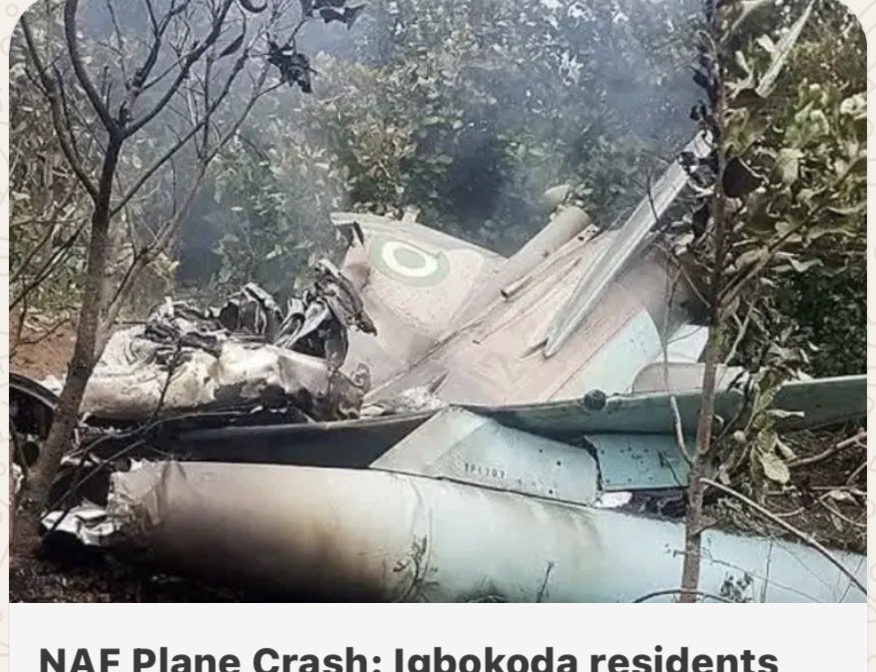
The Nigerian Air Force (NAF) has intensified efforts to strengthen aviation safety across its fleet following the tragic aircraft crash in Igbokoda, Ondo State, which claimed 25 lives, as recovery teams retrieved additional components of the ill-fated ATR 42-500 aircraft.
The latest development signals a renewed commitment by the military authorities to establish the circumstances surrounding the disaster while introducing stricter preventive measures to safeguard personnel and aircraft during future operations.
Specialist divers drawn from the Nigerian Navy and the Nigerian Safety Investigation Bureau (NSIB) have continued underwater search operations at the crash site, deploying sophisticated equipment to recover aircraft components considered vital to the ongoing investigation. The operation involves hydrographic surveys, satellite-based search imagery, excavation of mud and the pumping of excess water to improve access to submerged wreckage.
In response to the tragedy, the Chief of the Air Staff, Air Marshal Sunday Kelvin Aneke, has directed a comprehensive review of aircraft airworthiness, maintenance standards and aircrew competence across the service. The directive followed a high-level meeting involving senior Air Force commanders, where operational discipline, compliance with aviation procedures and flight safety management received renewed attention.
The investigation is also expected to examine evidence recovered from the aircraft, including technical components capable of helping investigators reconstruct events leading to the crash. Earlier, the Air Force identified the flight data recorder and cockpit voice recorder as critical to determining what happened during the aircraft’s final moments. Authorities have not announced a definitive cause of the accident.
Meanwhile, Ondo State Governor, Lucky Aiyedatiwa, has ordered immediate environmental intervention around the Igbokoda river following complaints from residents about offensive odours and fears of possible contamination associated with the aircraft crash.
The governor directed the Ministries of Environment and Health to undertake an extensive fumigation exercise aimed at reducing potential health risks and preventing possible outbreaks of waterborne diseases. The intervention reflects growing concerns about the environmental consequences of the disaster for communities surrounding the crash location.
Beyond the recovery operation, the tragedy has raised wider questions about military aviation safety, aircraft maintenance and the need for stronger coordination between military and civilian aviation regulators. The outcome of the investigation is expected to provide important lessons for improving operational standards and preventing similar disasters.
As families continue to mourn the victims, attention remains focused on the ongoing recovery operation, the findings of aviation investigators and the implementation of safety reforms designed to restore confidence in the Nigerian Air Force’s flight operations.